Previous issue | Next issue | Archive
 Volume 16 (5); September 2026 [Booklet]
 Research Paper
Impact of the housing system and applied precision technologies on productive and reproductive indicators in dairy herds
Mitev E, Popova Y, and Laleva S.
Online J. Anim. Feed Res., 16(5): 261-268, 2026; pii: S222877012600031-16
DOI: https://dx.doi.org/10.51227/ojafr.2026.31
Abstract
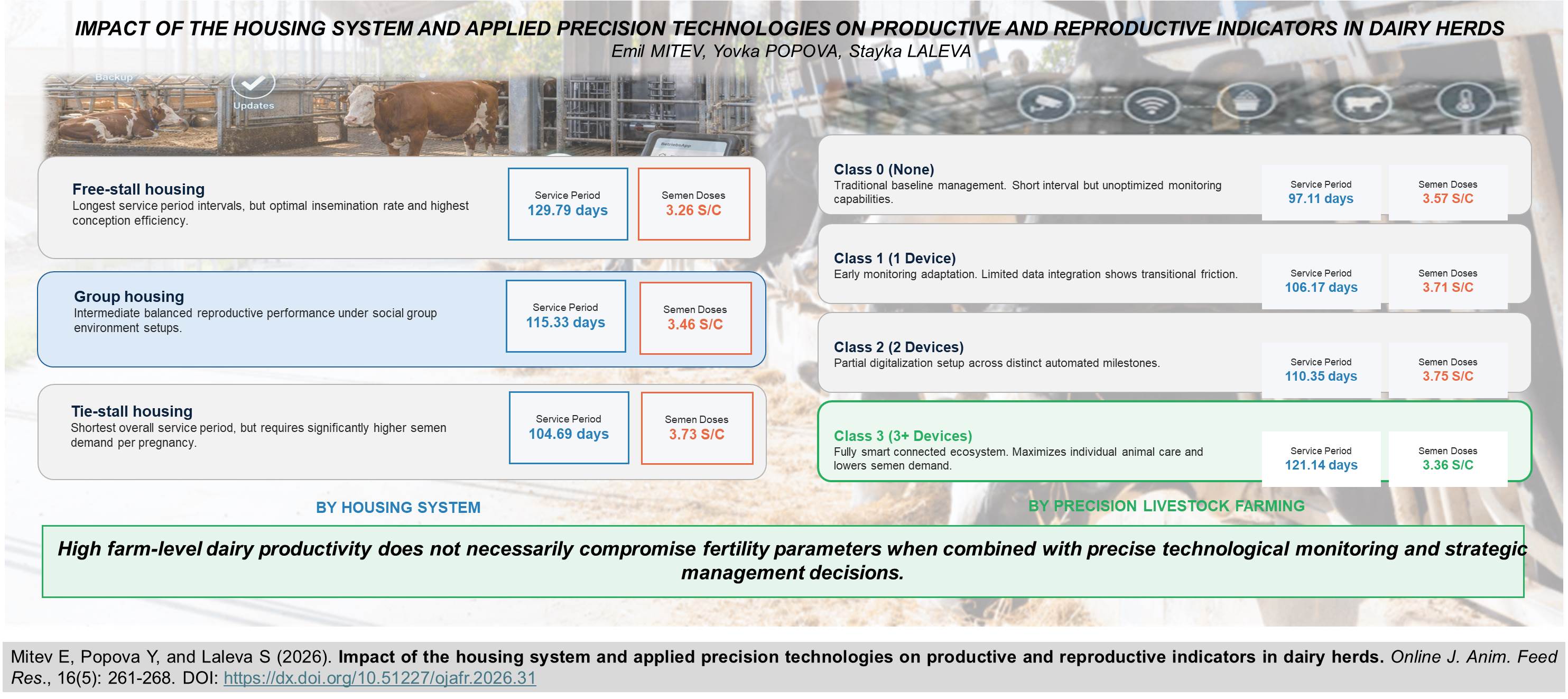
The objective of this study is to examine the associations of the number of applied precision technologies, housing systems, and 3.6%-fat-standardized milk yield groups with the farm-level average duration of the service period and the average semen doses per conception. For the purpose, a survey was held in 2025 by direct standardized interview among 180 owners of cattle farms in Bulgaria and the gathered information was analyzed by one-way analysis of variance (ANOVA). The results showed that high average daily milk yield over 30 kg was associated with a longer service period of 126 days, while for farms with low productivity (up to 20 kg) it was the shortest 102.17 days. Farms with tie-stall housing maintained the shortest service period (104.69 days) but showed lower conception efficiency, requiring a higher mean of 3.73 semen doses per conception. On the other hand, in free-stall housing, the service period was the longest (129.79 days), but the lowest mean of 3.26 doses per conception was recorded. The implementation of three or more precision technologies optimized reproductive management, demonstrating a lower mean of 3.36 doses per conception, whereas farms using only one or two technologies utilized a higher number of 3.71 and 3.75 doses, respectively. In conclusion, high farm-level productivity does not inevitably compromise fertility, provided that intensive milk production is balanced with precise technological monitoring and strategic management decisions.
Keywords: Precision livestock farming, dairy farms, service period, number of doses for insemination, housing system.
[Full text-PDF] [Scopus] [Crossref Metadata] [Export from ePrints]
 Research Paper
Assessment of quality of poultry feed manufactured in registered and unregistered feed mills in Bangladesh
Islam MS, He J, Uddin MS, Hossain MA, Akter M, Naim Z and Ramim RN.
Online J. Anim. Feed Res., 16(5): 269-277, 2026; pii: S222877012600032-16
DOI: https://dx.doi.org/10.51227/ojafr.2026.32
Abstract
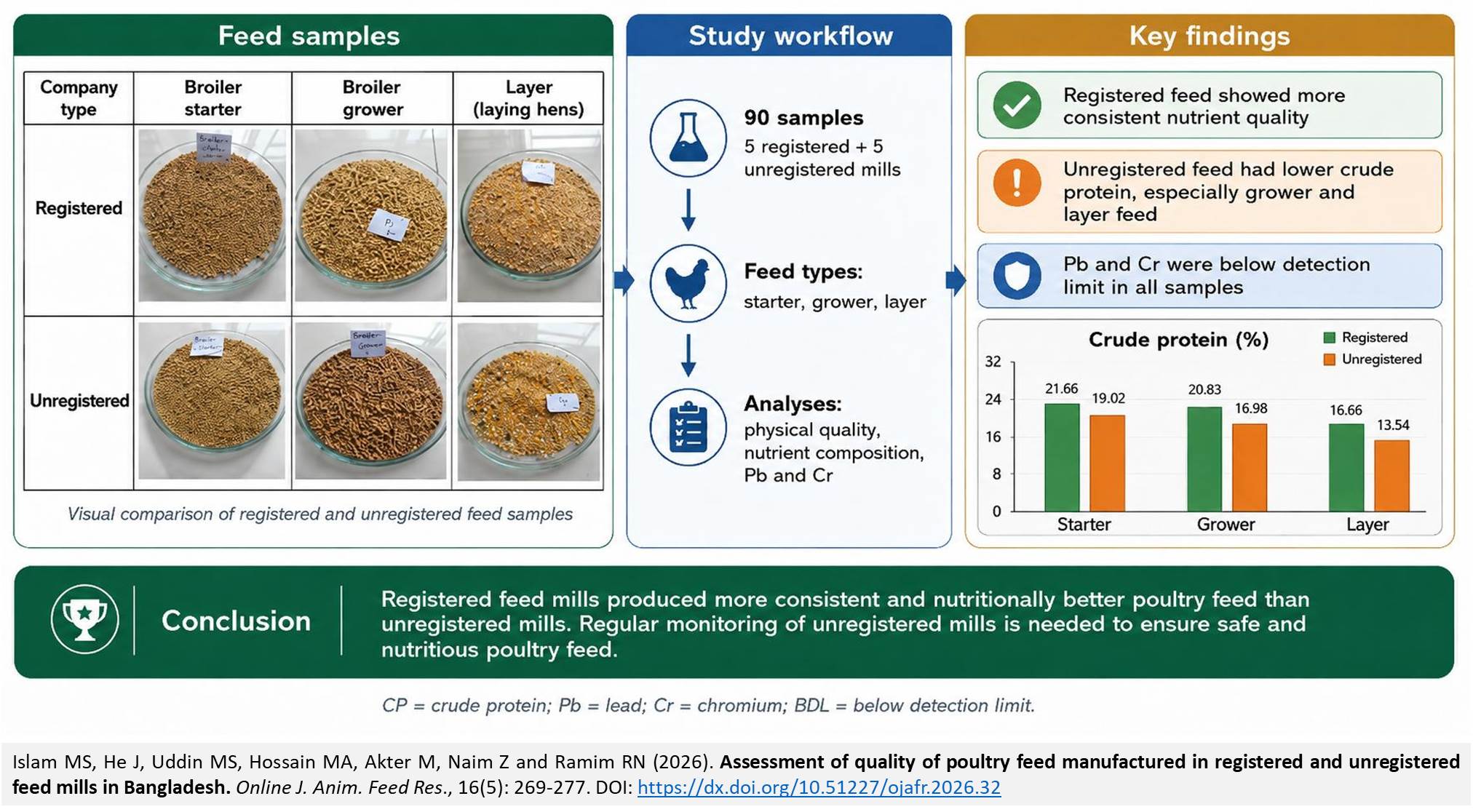
The study evaluated poultry feed quality and health-hazardous elements from registered and unregistered feed mills in Savar, Kaliakoir, and Sreepur upazilas of Dhaka Division, Bangladesh. A total of 90 feed samples, including broiler starter, grower, and layer feeds, were randomly collected from five registered and five unregistered feed mills, considering three samples in each category. The feed samples were evaluated for physical attributes, including color, odor, particle size, and the presence of foreign materials, and were subsequently subjected to proximate analysis for the determination of moisture, crude protein (CP), ether extract (EE), and ash. The concentrations of two heavy metals, lead (Pb) and chromium (Cr), were determined in the feed samples. Both registered and unregistered feed samples showed acceptable physical quality, characterized by normal color and smell, particle size and absence of visible mold contamination or foreign materials. Proximate analysis showed the significant variation in terms of moisture, CP, EE, and ash within and between feed groups, indicating comparatively lower quality of feed obtained from unregistered group. In broiler feed (starter and grower), mean moisture, CP, EE, and ash contents ranged from 10.45–11.35%, 16.98–21.66%, 5.24–8.20%, and 6.13–7.20%, respectively, across registered and unregistered categories. In layer feed, the corresponding values in registered and unregistered categories were 11.05% and 10.81% moisture, 16.86% and 13.54% CP, 5.45% and 5.78% EE, and 11.77% and 8.16% ash, respectively. The concentrations of Cr and Pb were found to be below the detection level for all types of feed in both categories. The present study found that feed from unregistered mills, particularly in crude protein, was below standard, whereas registered-mill feed largely met nutritional standards. Based on the measured physicochemical parameters and Pb and Cr levels, no significant public health risk was evident.
Keywords: Chicken feed, Health hazard, Nutritional quality, Physical quality, Proximate analysis.
[Full text-PDF] [Scopus] [Crossref Metadata] [Export from ePrints]
 Research Paper
Digestibility and feeding value of improved tropical grasses and Leucaena leucocephala cultivars for goat nutrition in Vietnam
Liem TN, Dung NM, Duc LM, Hai DT, and An LV.
Online J. Anim. Feed Res., 16(5): 278-288, 2026; pii: S222877012600033-16
DOI: https://dx.doi.org/10.51227/ojafr.2026.33
Abstract
This study evaluated the nutritive value and digestibility of five tropical grass cultivars, including Ruzi (Brachiaria ruziziensis), Mulato II (Brachiaria ruziziensis × B. decumbens × B. brizantha), and three Panicum maximum cultivars (Purple, Mombasa and Mun River), together with five Leucaena leucocephala cultivars (Tarramba, Peru, Cunningham, KU15 and KU56). In vitro digestibility was determined using ANKOM DAISYII incubator system, and an in vivo feeding trial evaluated the effects of increasing dietary inclusion of Tarramba leaves (0, 10, 20 and 30% of dietary dry matter) in Mombasa-based diets on nutrient intake and apparent digestibility in goats. Grass cultivars differed significantly (P < 0.05) in dry matter and fibre digestibility. No significant differences were detected among grass cultivars for in vitro dry matter, neutral detergent fibre or acid detergent fibre digestibility, although numerical differences were observed. Similarly, digestibility did not differ significantly among the five Leucaena cultivars, whereas Leucaena cultivars had substantially higher crude protein concentrations than the grasses. Increasing Tarramba inclusion resulted in a linear increase in crude protein intake and apparent crude protein digestibility while apparent dry matter and organic matter digestibility remained unaffected. Dry matter and organic matter intake showed quadratic responses to increasing Tarramba inclusion, whereas ADF digestibility decreased linearly and NDF digestibility showed a numerical decline. Under the conditions of the short-term digestibility trial, inclusion of Tarramba leaves up to 30% of dietary dry matter did not adversely affect apparent dry matter and organic matter digestibility. These findings indicate that improved tropical grasses and Leucaena can provide complementary forage resources for improving the nutritional quality of grass-based diets for goats.
Keywords: Apparent digestibility, Crude protein, Goat nutrition, Tropical forages, Leucaena leucocephala.
[Full text-PDF] [Scopus] [Crossref Metadata] [Export from ePrints]
 Research Paper
Valorization of young prickly pear (Opuntia ficus-indica) cladodes as a sustainable livestock feed supplement: physicochemical, nutritional value and antioxidant activity
Nair S, Belkhodja H, and Belhadj SM.
Online J. Anim. Feed Res., 16(5): 289-296, 2026; pii: S222877012600034-16
DOI: https://dx.doi.org/10.51227/ojafr.2026.34
Abstract
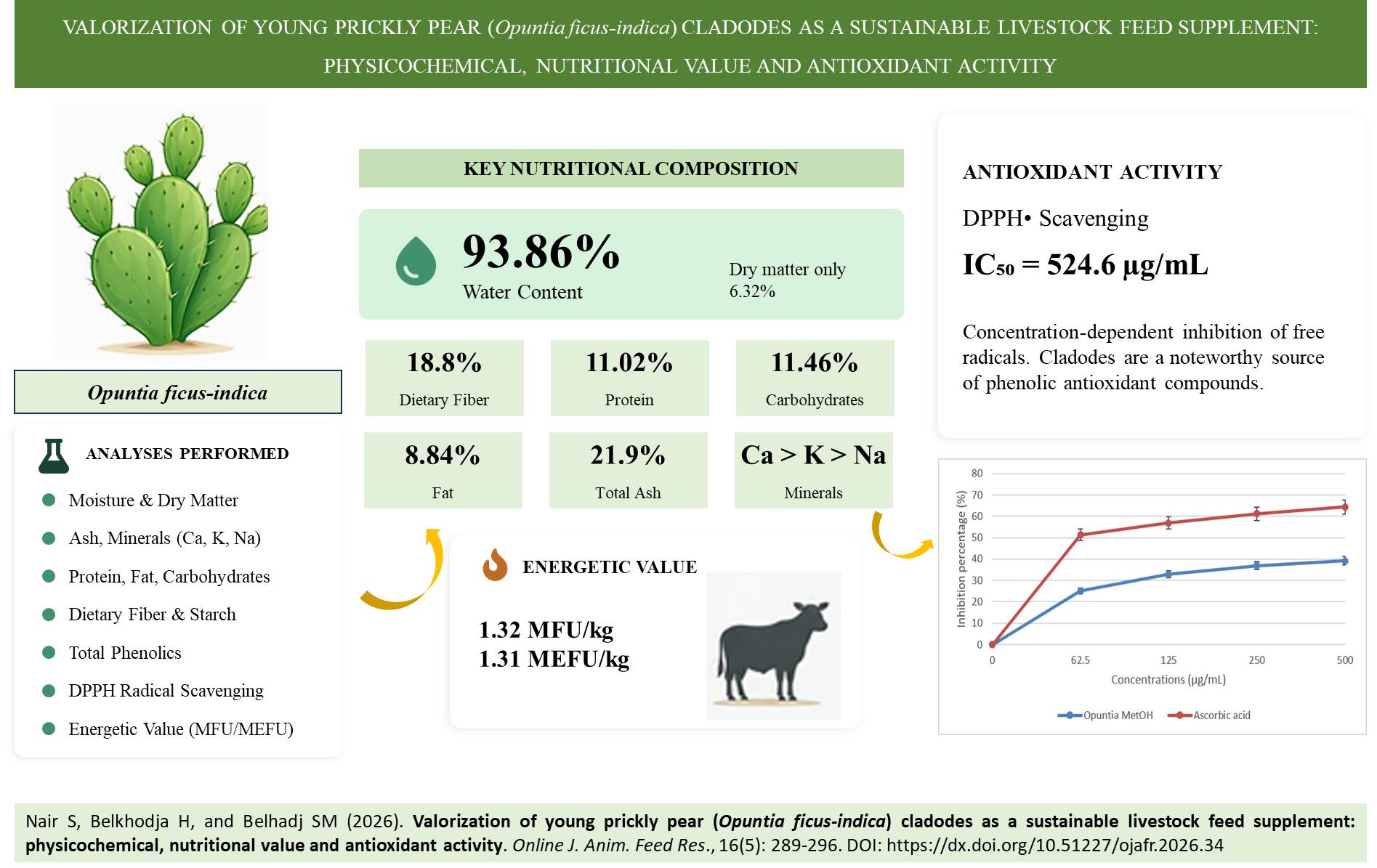
The prickly pear cactus (Opuntia ficus-indica) is prevalent in arid and semi-arid environments, known for its drought tolerance and ability to thrive in poor soils. The cladodes, or pads, are particularly relevant as a nutritional supplement for animals due to their high nutrient content and water-retention capacity. This study aims to analyze the nutritional qualities of young Opuntia ficus-indica cladodes growing in the Chorfa region of Mascara Province, Algeria for prospective integration into feedstuff. The physicochemical study was based on the determination of moisture, dry matter, sugar, protein, fat, ash, minerals, starch, and fiber content. The phytochemical analysis was performed by total phenolic content determination. It was followed by antioxidant potential evaluation using DPPH free radical scavenging assay and energetic value assessment. The physicochemical study revealed that the cladodes had a high-water content (93.86 ± 0.15%) and very low dry matter (6.32 ± 0.2%). The total ash content was 21.9 ± 0.03%, with calcium as the most abundant mineral, followed by potassium and sodium. The cladode had a good amount of dietary fiber (18.8 ± 1.1%) and presented values of 11.46 ± 0.2%, 11.02 ± 1.1%, and 8.84 ± 0.3% for carbohydrate, protein, and fat content, respectively. Based on the phytochemical characterization, cladodes were a noteworthy source of antioxidant compounds. The estimated energy values are 1.32 MFU/kg and 1.31 MEFU/kg. The methanolic extract was effective in inhibiting the free radical DPPH• in a concentration-dependent manner with an IC50 value of 524.6 µg/mL. Opuntia ficus-indica cladodes were found to be a good source of sugars, proteins, and dietary fiber, making them potentially valuable ruminant feed.
Keywords: Cladodes, Fiber content, Opuntia ficus-indica, Physicochemical analysis, Livestock nutrition.
[Full text-PDF] [Scopus] [Crossref Metadata] [Export from ePrints]
 Research Paper
The physical, nutritional, phytochemical, and microbiological properties of water mimosa (Neptunia oleracea Lour) silage using different moisture contents for poultry feed
Yosi F, Muhakka M, Gofar N, Hasanah N, Nababan A, and Lestari I.
Online J. Anim. Feed Res., 16(5): 297-303, 2026; pii: S222877012600035-16
DOI: https://dx.doi.org/10.51227/ojafr.2026.35
Abstract
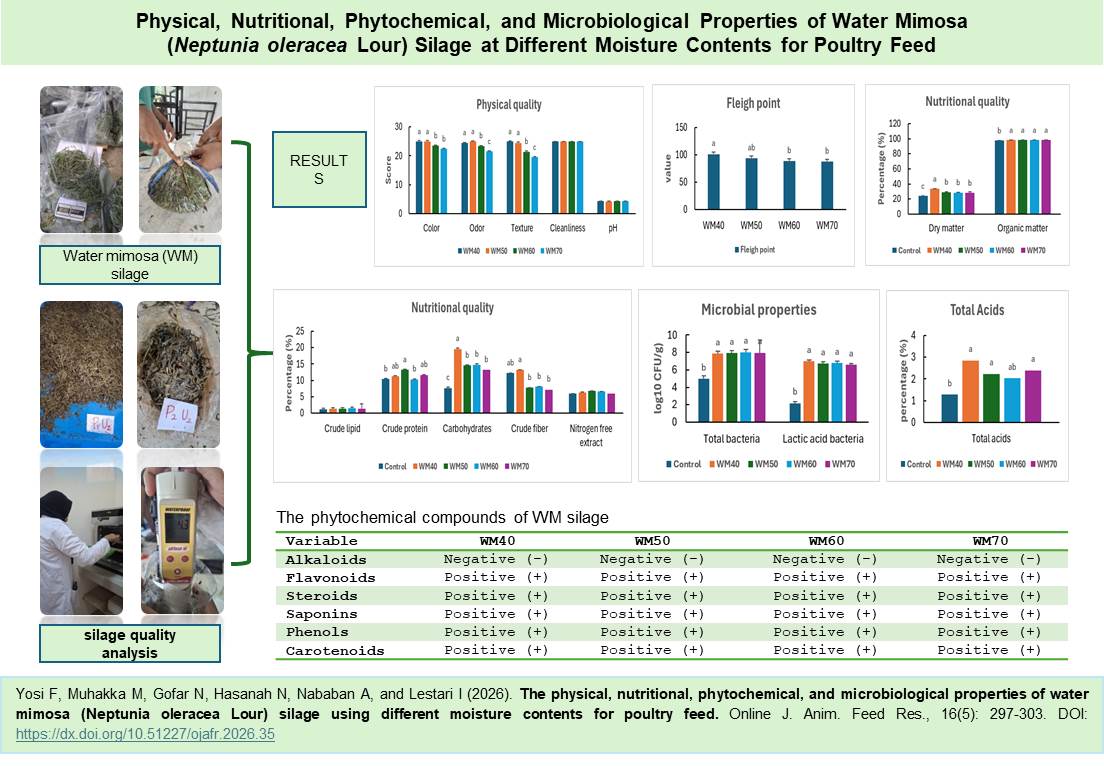
The potential of water mimosa (WM; Neptunia oleracea Lour) swamp legumes, as a source of green protein, phytogenic compounds, and probiotics in the form of silage juice for waterfowl such as ducks is quite large, but to date it has not been further investigated. This study aimed to evaluate the physical, nutritional, phytochemical, and microbiological characteristics of WM silage fermented at different moisture levels. This study used a completely randomized design consisting of 5 treatments and 3 replicates. The treatments consisted of control group (fresh WM legumes), WM40, WM50, WM60, and WM70: WM silage with moisture levels of 40%, 50%, 60%, and 70%, respectively. The results of the analysis of variance showed that differences in silage moisture content had a significant effect on color, aroma, and texture scores (P < 0.05). Qualitative tests showed that WM silage fermented at moisture levels of 40-70% contained several phytochemical/antibacterial compounds, including flavonoids, steroids, saponins, phenols, and carotenoids. Differences in WM silage moisture content significantly affected dry matter, organic matter, crude protein, crude fiber, carbohydrates, and Fleigh point (P < 0.05). Total acid, total bacteria count, and lactic acid bacteria count in WM silage fermented at different moisture contents increased compared to the control group (P < 0.05) but showed similar results between moisture levels of 40 and 70%. In conclusion, the making of WM silage with a moisture content of up to 50% provided optimal yields in terms of the physical, microbiological, nutritional, and phytochemical properties of WM silage.
Keywords: Microbiological characteristics, Moisture content, Neptunia oleracea Lour, Nutritional content, Phytochemical compounds, Silage.
[Full text-PDF] [Scopus] [Crossref Metadata] [Export from ePrints]
 Research Paper
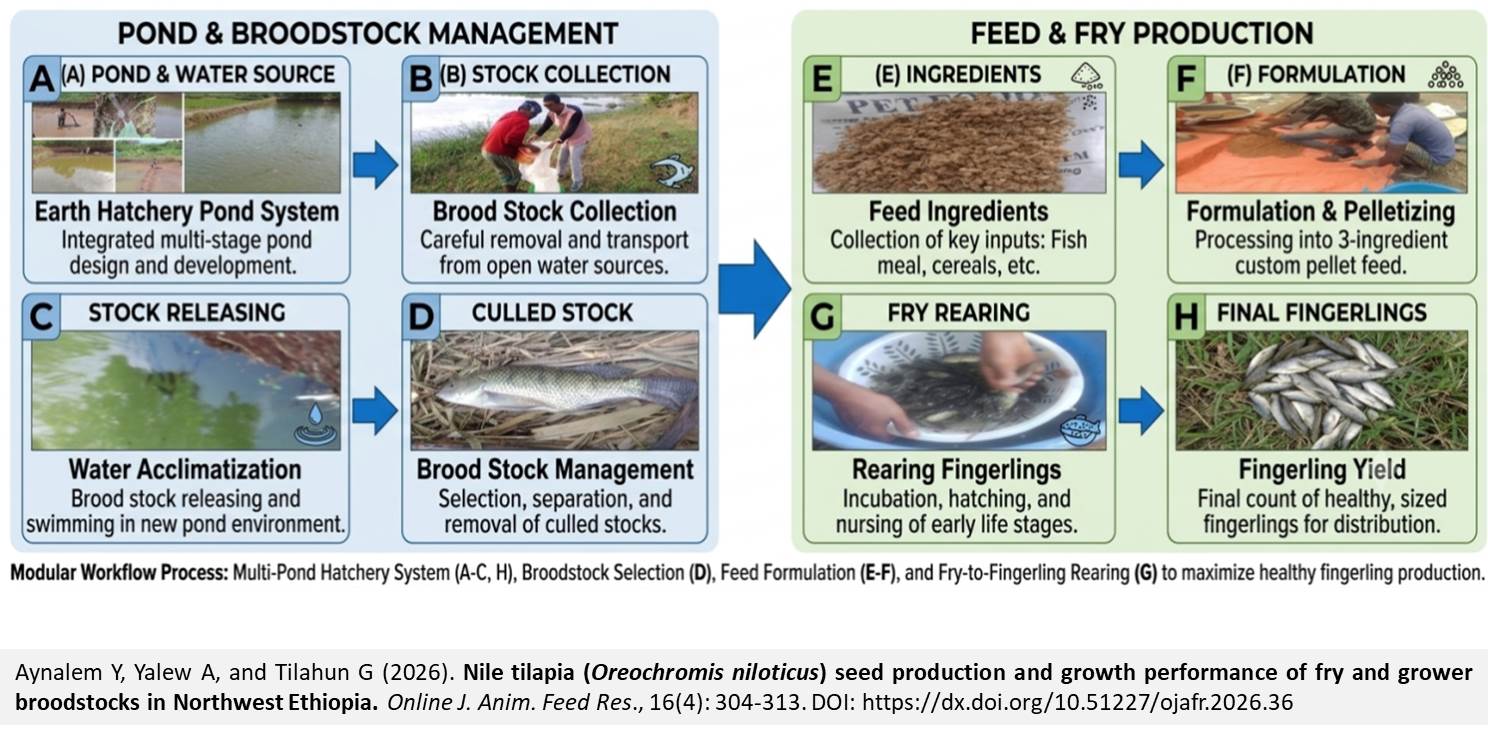
Nile tilapia (Oreochromis niloticus) seed production and growth performance of fry and grower broodstocks in Northwest Ethiopia
Aynalem Y, Yalew A, and Tilahun G.
Online J. Anim. Feed Res., 16(5): 304-313, 2026; pii: S222877012600036-16
DOI: https://dx.doi.org/10.51227/ojafr.2026.36
Abstract
Small-scale Nile Tilapia (Oreochromis niloticus) fry production is essential for improving seed availability and supporting sustainable aquaculture. This study evaluated the biological performance and economic feasibility of Nile tilapia fry production in earthen ponds using a locally formulated diet under small-scale farming conditions in Ethiopia. Thirty-three broodstock fish (11 males and 22 females) collected from the Geray Reservoir region were stocked in a 100 m² earthen pond at a male-to-female ratio of 1:2 and fed a locally formulated diet containing 35% crude protein at 3% of body weight per day. The diet consisted of fish meal (38.1%), soybean meal (38.1%), and wheat bran (24.0%), offered twice daily. Male brood stocks showed significantly greater growth performance than females (P < 0.001). Each spawning cycle produced approximately 3,300 fry, and broodstocks spawned an average of eight times annually, yielding about 1,200 fry per female and an estimated annual production of 26,400 fingerlings. Fry reared in the best-performing on-farm pond (researcher) achieved significantly greater final weight, final length, and daily growth rate than those reared at the other sites (farmers) (P < 0.001), while survival remained consistently high (98.75–100%) with no significant differences among sites. In water quality, no significant differences among sites for temperature, dissolved oxygen, pH, total dissolved solids and ammonia (P > 0.05), although electrical conductivity differed significantly (P < 0.001). Total feed consumption was 251.16 kg, corresponding to a total feed cost of US$105.94. The selling price was US$0.079 per fingerling. The production system generated positive economic returns. These findings demonstrate that earthen-pond-based Nile tilapia fry production using locally formulated feeds is a technically feasible and economically viable approach for increasing the availability of quality fingerlings. The technology has strong potential for dissemination through Farmers Training Centers to support sustainable aquaculture development, fisheries enhancement, and improved rural livelihoods in Ethiopia.
Keywords: Economic feasibility, Ethiopia, Formulated feed, Fry production, Growth performance, Oreochromis niloticus
[Full text-PDF] [Scopus] [Crossref Metadata] [Export from ePrints]
 Review
Husbandry and Nutritional Management of Hobby and Backyard Poultry Flocks: Genotype, Natural Feed Resources, Health, and Performance
Mevliyaoğulları E, Yenilmez F, and Yıldırım A.
Online J. Anim. Feed Res., 16(5): 314-321, 2026; pii: S222877012600037-16
DOI: https://dx.doi.org/10.51227/ojafr.2026.37
Abstract
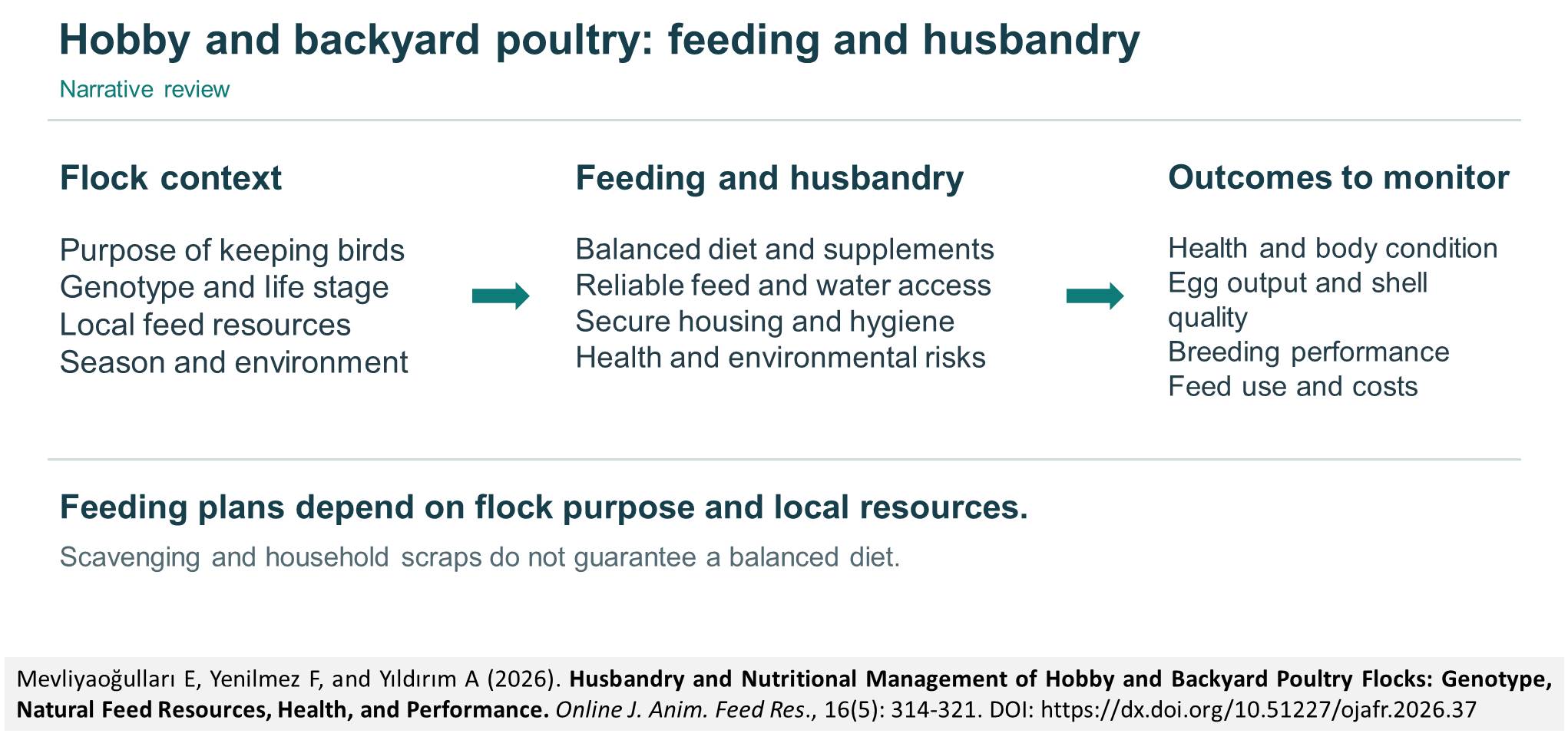
Hobby and backyard poultry keeping encompasses systems ranging from a few urban laying hens kept for companionship to low-input rural flocks that generate income and provide animal-source protein. This review examines how flock purpose, genotype, life stage, feed resources, housing, and health considerations inform husbandry and feeding decisions in these diverse systems. Egg production, companionship, and the use of household scraps predominate in urban hobby flocks, whereas income, household nutrition, and low-cost production are central to rural systems. Indigenous breeds are important for adaptation to low-input conditions and genetic resource conservation, although small, dispersed breeding populations are vulnerable to inbreeding and genetic loss. The amount and nutritional value of scavenged feed and separately supplied household scraps vary with season, region, genotype, and flock size; these resources do not guarantee a balanced diet. Balanced feeding is particularly important during chick rearing, while adequate energy, amino acids, minerals, and clean water are required during lay. Evidence on feeding behavior, gut microbiota, stress, biosecurity, and soil lead exposure indicates that nutritional management extends beyond ration composition. Geographic and methodological differences among studies limit generalization. For practical flock management, the review emphasizes defining flock purpose, selecting a suitable genotype, assessing local feed resources, providing life-stage-specific supplementation, ensuring secure housing and feed access, and managing health and environmental risks. Future studies should address genotype-specific nutrient requirements, seasonal feed resources, and the effects of feeding and management interventions. Existing evidence does not establish a universal feed formula for all hobby and backyard poultry.
Keywords: Animal welfare, Backyard poultry keeping, Hobby poultry, Indigenous breeds, Scavenging feed resource, Supplementary feeding.
[Full text-PDF] [Scopus] [Crossref Metadata] [Export from ePrints]
 Research Paper
Dynamics of dairy cow milk productivity and frequency of visits to the milking robot under a voluntary milking system
Kepkalo I, Khomenko M, Seba M, Svyrydenko N, Lytvynenko T, Slobodyanyuk N, Pylypchuk O, Sopiha M, Naumenko T.
Online J. Anim. Feed Res., 16(5): 322-331, 2026; pii: S222877012600038-16
DOI: https://dx.doi.org/10.51227/ojafr.2026.38
Abstract
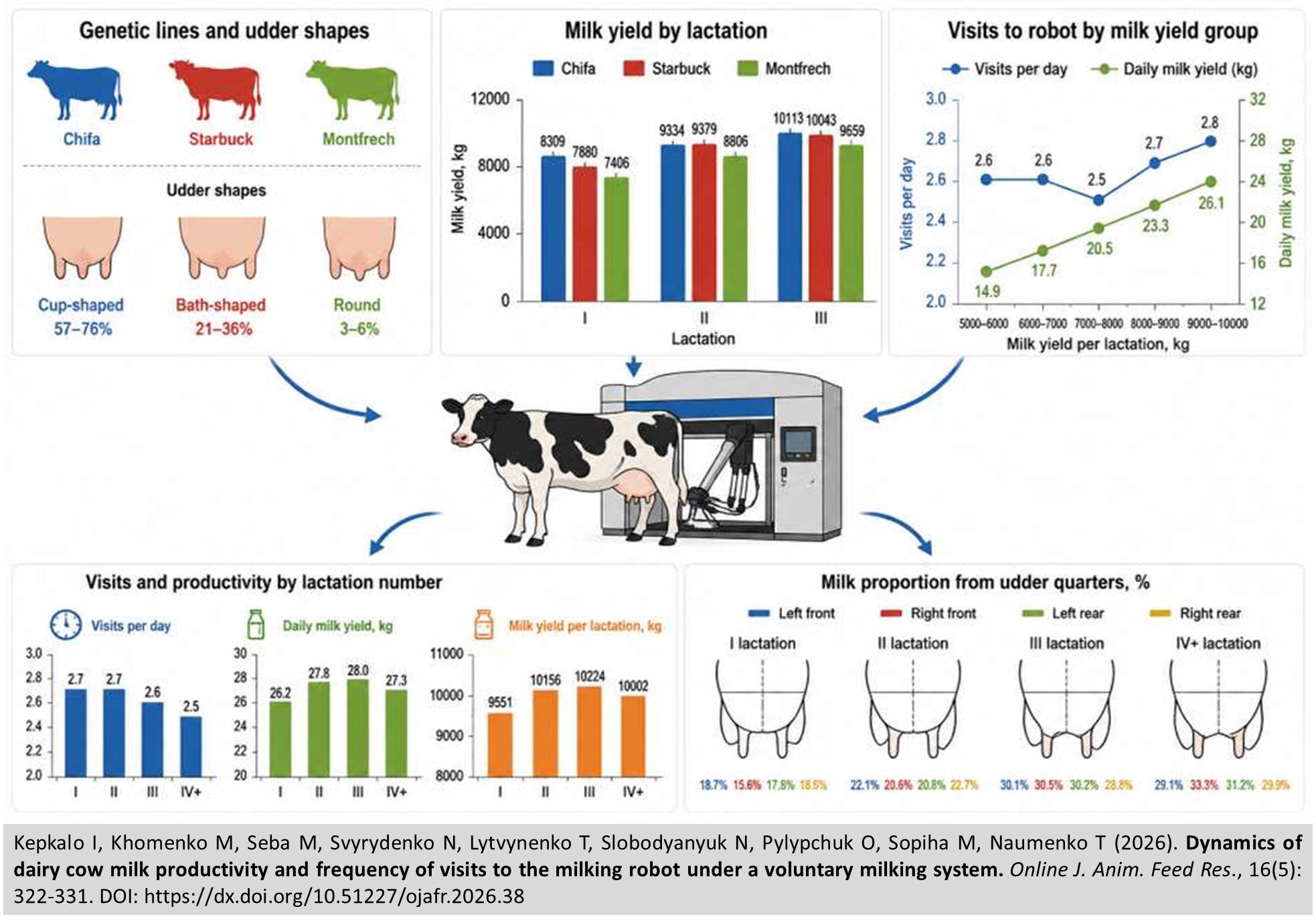
The study analyzed the frequency of voluntary visits to an automated milking system (AMS) by Holstein cows, along with milk yield indicators, functional characteristics of the udder, and the duration of intervals between milkings. The research was conducted at a farm in the Kyiv region using a loose-housing system and robotic milking. Trends in average daily milk yield and the frequency of visits to the milking robot were analyzed using data from the VMS-2012 automated control system, while milk yield was recorded using “Fullflow” electronic meters. Milk flow rate was determined based on the amount of milk obtained from individual udder quarters and the duration of milking. To evaluate the relationship between productivity and milking frequency, cows were categorized into five groups according to lactation milk yield (5000–6000; 6000–7000; 7000–8000; 8000–9000; and 9000–10000 kg) and according to lactation number (I, II, III, IV or higher). Animals belonging to the Chifa, Starbuck, and Montfrecht lines were evaluated separately, taking into account udder conformation, milk flow rate, and the proportion of milk obtained from individual udder quarters. It was found that cows with a lactation yield of 9000–10000 kg visited the milking robot more frequently—2.8 times per day—compared with animals yielding 6000–8000 kg, which visited it 2.6 times per day. As lactation number increased, the frequency of visits decreased, reaching 2.5 visits per day in cows in their fourth and subsequent lactations. The highest 305-day milk yield was recorded in cows in their third lactation, which visited the robot 2.6 times per day. First-lactation cows, despite having the highest visit frequency of 2.7 times per day, produced 9551 kg of milk during the 305-day lactation. Milk flow rates from individual udder quarters were similar, with slightly higher values observed in the rear quarters.
Keywords: Average daily milk yield, Cows, Lactation, Mammary gland, Milking robots, Udder.
[Full text-PDF] [Scopus] [Crossref Metadata] [Export from ePrints]
 Research Paper
Physiological response and heat shock expression in the Nigerian indigenous goat breeds raised under thermal stress in Southwest Nigeria
Fatoki DO, Ayoola MO, and Berena GA.
Online J. Anim. Feed Res., 16(5): 332-341, 2026; pii: S222877012600039-16
DOI: https://dx.doi.org/10.51227/ojafr.2026.39
Abstract
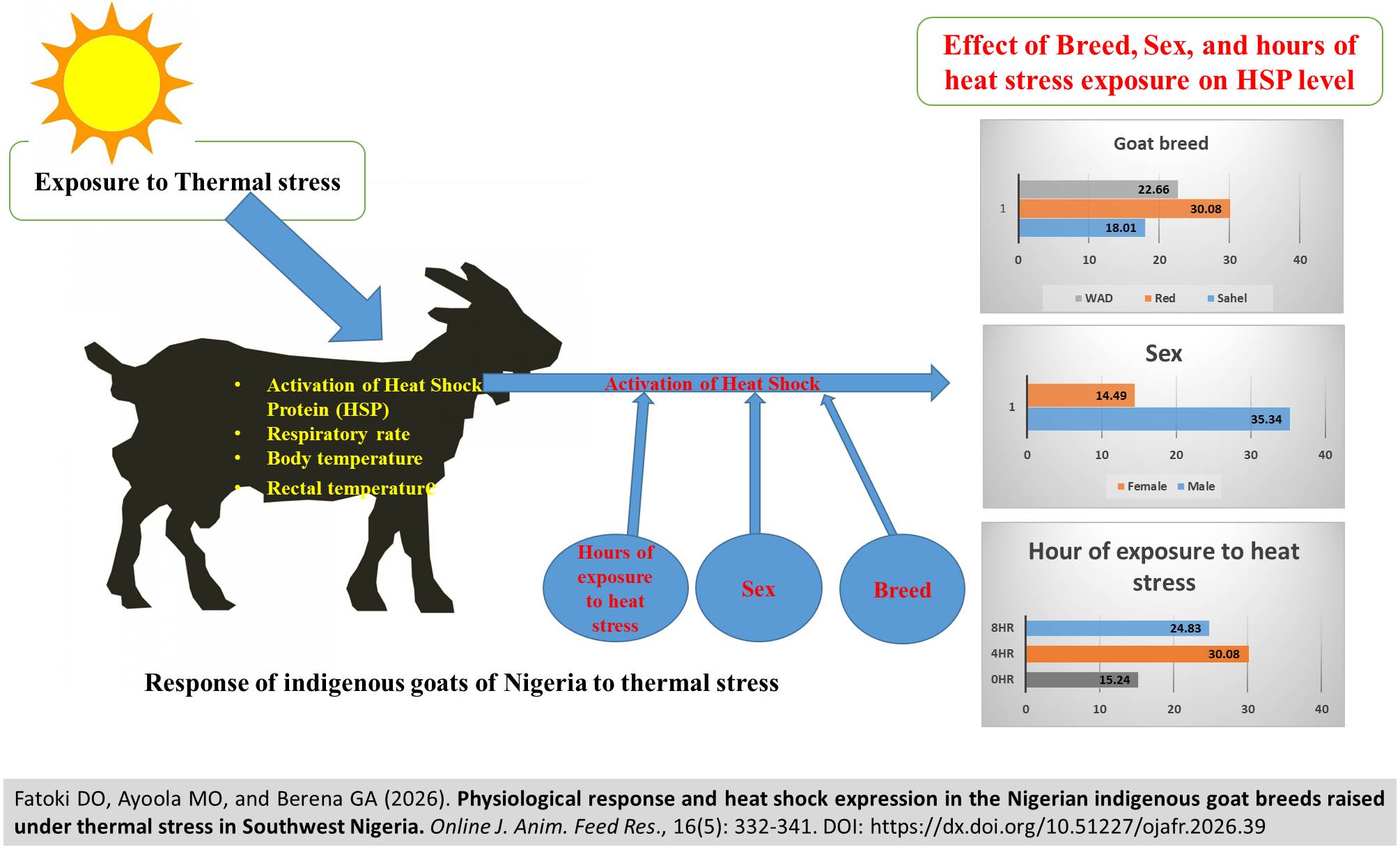
Environmental stress remains a major threat to optimum productivity of livestock in tropical climates. Generally, goats often develop adaptive mechanisms to thrive in their native environment. However, little is known about the adaptation of the Nigerian indigenous goat breeds to different environmental conditions. The influence of varying periods of heat exposure on physiological response and HSP70 gene expression in the Nigerian indigenous goat breeds was therefore examined in this study. A total of 45 goats comprising West African dwarf (WAD), Red Sokoto (RS), and Sahel (SH) breeds were assigned to three treatments; 0, 4, and 8 hours of daily exposure to environmental temperature. Each treatment had two males and 3 females per breed of goats. Environmental variables were monitored while Temperature-Humidity-Index (THI) was calculated. Also, body temperature (BST), rectal temperature (RT), respiratory rate (RR), pulse rate (PR) were monitored while serum HSP70 level was determined. Average temperature (29.86 °C), relative humidity (73.57%) and THI (79.34) were recorded. Also, there was no significant effect of breed on all the physiological parameters, hours of exposure to heat had significant influence on BST, RT, RR and PR. Also, physiological indices monitored significantly (P < 0.05) increased with days of exposure while effects of sex on physiological responses of the various breeds exposed to environmental stress was not significant. For HSP70 expression, Red Sokoto goats had the highest level (30.08 ± 0.75 ng/mL), compared to WAD goats (22.66 ± 0.53 ng/mL) and Sahel goats (18.01 ± 0.55 ng/mL) while male goats (35.34 ± 0.50) had higher HSP level compared to female goats (14.49 ± 0.44). In conclusion, duration of exposure to heat influenced physiological responses and serum HSP expression in the Nigerian indigenous goats.
Keywords: Adaptation, Heat stress, HSP70 expression, Indigenous goat breeds, Physiological response.
[Full text-PDF] [Scopus] [Crossref Metadata] [Export from ePrints]
 Research Paper
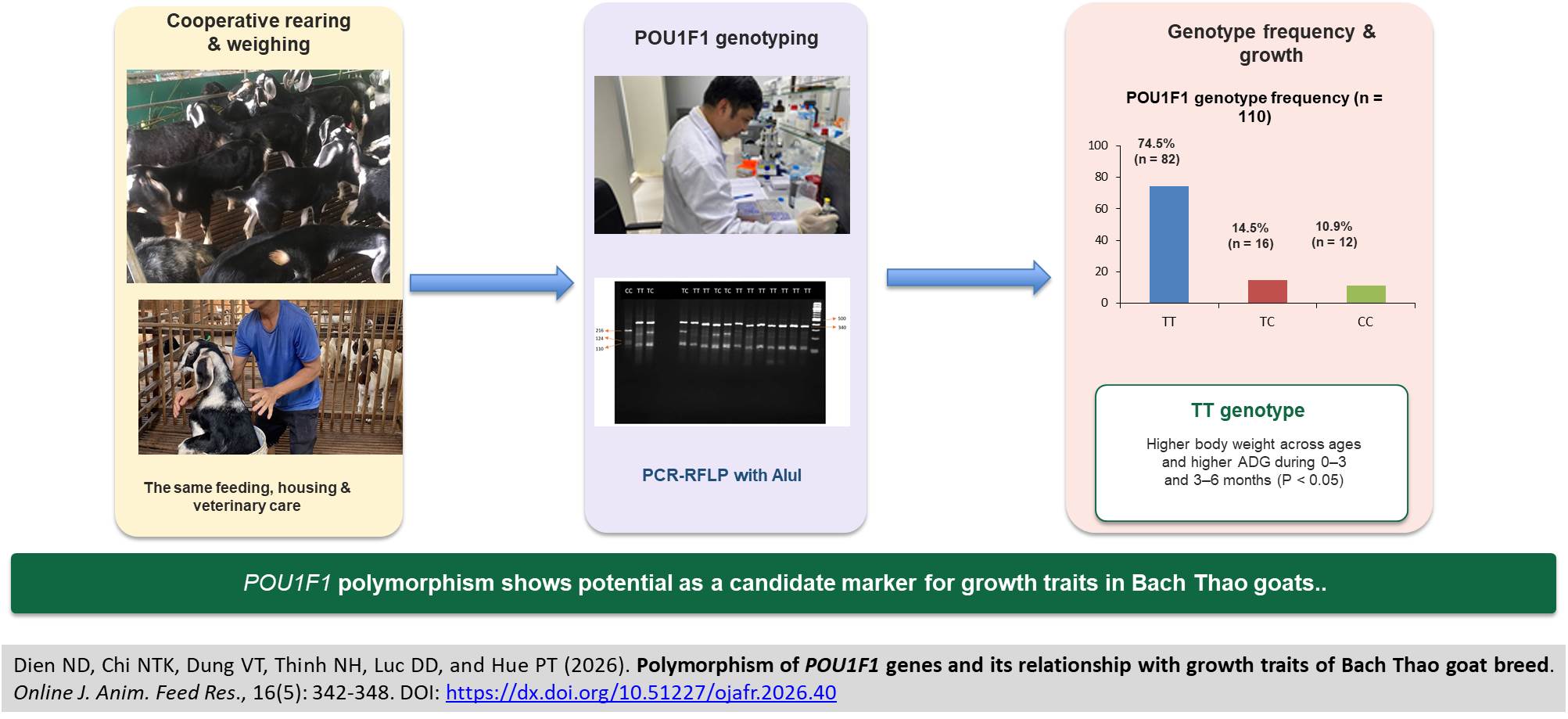
Polymorphism of POU1F1 genes and its relationship with growth traits of Bach Thao goat breed
Dien ND, Chi NTK, Dung VT, Thinh NH, Luc DD, and Hue PT.
Online J. Anim. Feed Res., 16(5): 342-348, 2026; pii: S222877012600040-16
DOI: https://dx.doi.org/10.51227/ojafr.2026.40
Abstract
This study aimed to evaluate the polymorphism of the POU1F1 gene and its association with body weight and weight gain in Bach Thao goats. A total of 110 animals (64 males and 46 females) were used, and ear tissue samples were collected for DNA extraction and PCR-RFLP analysis to determine POU1F1 genotypes. Allele and genotype frequencies were subsequently calculated. Three genotypes (TT, TC, and CC) were identified, with the T allele and TT genotype showing the highest frequencies. Body weight at birth, and at 3, 6, and 9 months of age, as well as average daily gain (ADG during the corresponding growth period were recorded. Goats with the TT genotype had significant higher body weight at birth, and at 3, 6, and 9 months of age, together with higher ADG during the corresponding period, than those with the CC genotypes (P < 0.05).. These finding indicates that POU1F1 polymorphism is associated with growth performance in Bach Thao goats and may have potential as a molecular marker for marker-assisted selection to improve growth traits in this breed.
Keywords: POU1F1, Bach Thao goat, Weight, Gene polymorphism, PCR–RFLP.
[Full text-PDF] [Scopus] [Crossref Metadata] [Export from ePrints]
Research Paper
Potential risk factors associated with large intestinal impaction in working donkeys at Egypt
Al-Antaif W, Marzok M, Hamad Y, Almubarak A and El-khodery S.
Online J. Anim. Feed Res., 16(5): 349-356, 2026; pii: S222877012600041-16
DOI: https://dx.doi.org/10.51227/ojafr.2026.41
Abstract
Large intestinal impaction is a principal cause of abdominal pain in donkeys, associated with high morbidity and mortality. The objective of this study was to investigate potential risk factors associated with large intestinal impaction in working donkeys in northern Egypt. A case-control study was conducted on 75 donkeys (4–12 years, weighing 150–290 kg) between September 2020 and August 2024. Clinical, parasitological, and biochemical examinations were performed. Logistic regression was applied to identify independent predictors of impaction. Fifty-three donkeys were diagnosed with large intestinal impaction, confirmed by clinical signs and elevated serum triglycerides (224.6 ± 36.0 vs. 196.0 ± 23.0 mg/dl, P < 0.05). Significant risk factors included older age (>10 years; OR = 16.8, 95% CI: 8.17–33.64, P = 0.001), female sex (P < 0.05), poor body condition (P < 0.01), heavy workload (P < 0.05), dental disease (P < 0.05), orthopedic problems (P < 0.05), and feeding rice husk (OR = 39.5, 95% CI: 1.1–14.13, P = 0.044). Seasonal variation also increased risk (OR = 5.8, 95% CI: 1.2–27.45, P = 0.026). Clinically, constipation (OR = 277.8, P < 0.0001), anorexia (OR = 92.16, P < 0.0001), and absent gut sounds (OR = 61.36, P < 0.0001) were the strongest diagnostic indicators. Poor nutritional management, particularly rice husk feeding, advanced age, and seasonal variations are key predictors of large intestinal impaction in working donkeys in northern Egypt. Clinical vigilance, especially in geriatric animals, is essential to reduce morbidity and improve welfare.
Keywords: Colic; Epidemiology; Equine; Forages; Risk factors
[Full text-PDF] [Scopus] [Crossref Metadata] [Export from ePrints]
Previous issue | Next issue | Archive
This work is licensed under a Creative Commons Attribution 4.0 International License (CC BY 4.0).
| Next > |
|---|